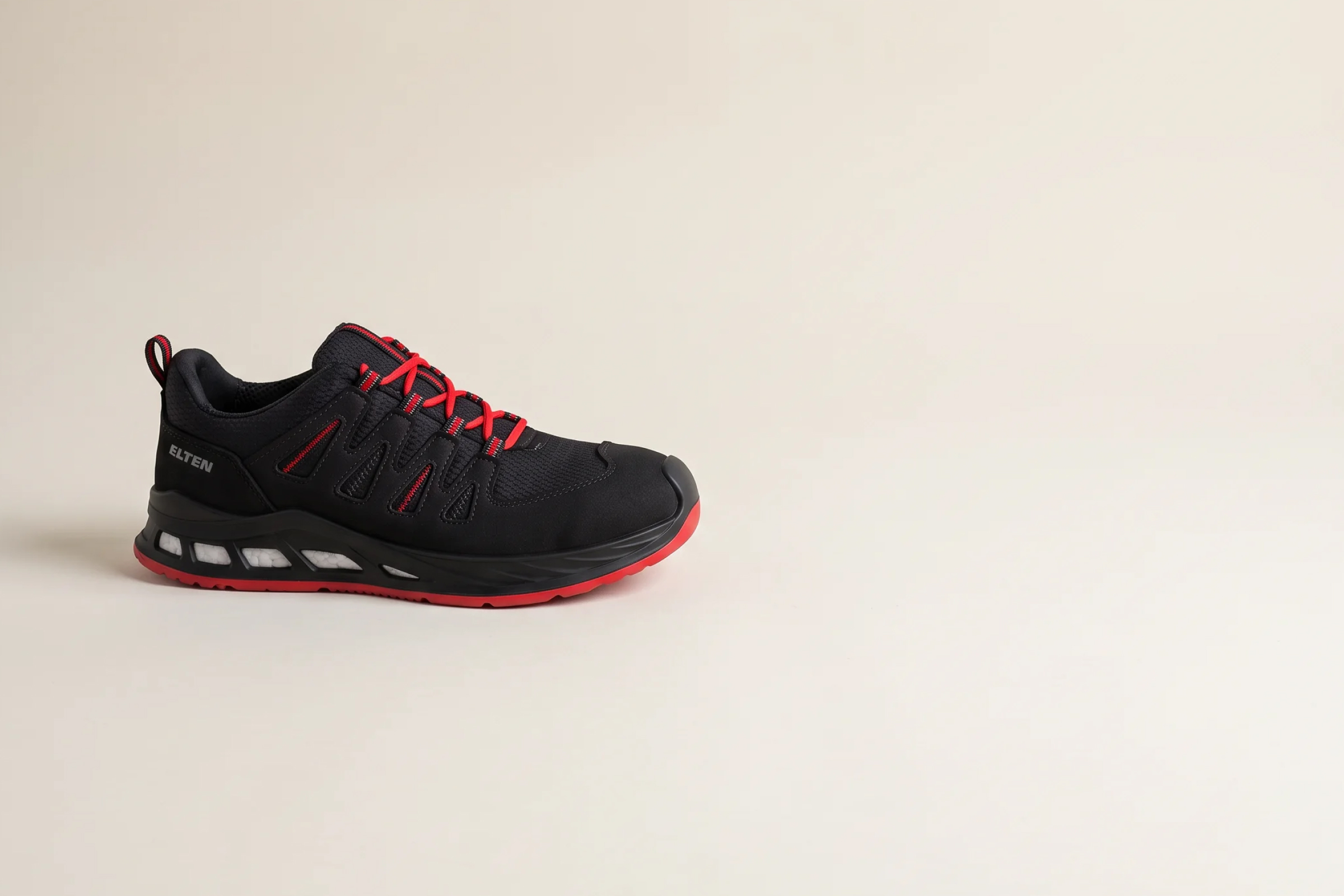
Quick Summary
This guide compares the 12 best AI tools and platforms for product photography. We reviewed top solutions such as Fibbl, Zakeke, and Photoroom, weighing features, pricing, pros, and each tool’s best use cases, so you can make the best choice for your business’s needs. Fibbl leads for mid-size to large footwear and bag brands that need hyper-realistic product images and lifestyle imagery at catalog scale, all produced from a single 3D scan. Zakeke excels at AI-powered image customization, while Photoroom suits small sellers needing quick background edits.
# |
Tool |
Best For |
|---|---|---|
1 |
Fibbl |
Mid-size to large footwear and bag brands needing accurate, on-brand product images at catalog scale from a single 3D scan |
2 |
Zakeke |
E-commerce platforms requiring image customization |
3 |
Photoroom |
Small businesses and marketplaces needing quick background removal and basic editing |
Why Bother With AI Tools for Product Photography?
Traditional product photography is expensive, painfully slow, and labor-intensive.
Traditional shoots require physical samples, professional studios, photographers, and extensive post-production work. When you need to update backgrounds, create seasonal campaigns, or showcase products from different angles, the entire process starts over again.
AI tools are making product photography cheaper, faster, and more consistent.
Modern AI tools and platforms can now generate professional product images (with and without models) in minutes and remove and replace backgrounds instantly. The more powerful ones go beyond AI-imaging capabilities and can create 3D models from 2D photos, enabling AR/virtual try-on experiences . For brands managing hundreds or thousands of SKUs, these technologies aren’t just convenient, they’re transformative.
This guide examines 12 leading AI tools for product photography, comparing their capabilities to help you find the one that’s best for your business.
Why Listen to Us?
Fibbl has processed more than 72 million consumer interactions through 3D product and AI imagery experiences, working with leading footwear and bag brands, including Samsonite, GANT, and Tumi..
Our optimized, industrialized 3D pipeline handles thousands of SKUs season after season, giving us deep expertise in what actually works for scaling visual content at the enterprise level.
What Is an AI Product Photography Tool?
An AI product photography tool uses artificial intelligence and machine learning to create, edit, or enhance product images without traditional photography. These solutions range from simple background-removal apps to sophisticated 3D asset-creation platforms.
Modern AI product photography tools typically offer some combination of:
- Background removal
- Image enhancement
- Scene generation
- Lighting adjustment
- Format optimization
Advanced platforms add 3D modeling capabilities, enabling brands to create interactive product experiences and generate unlimited angles on top of AI imagery.
All AI product photography tools generally follow one of two workflows to generate product images. The first starts with a digitally saved 2D photo or a text prompt. The tools that follow this workflow either clean up existing backgrounds or generate the product and scene together. This approach is fast and affordable, making it suitable when approximate product representation is good enough
The second workflow starts from a 3D model of the actual product and generates images and scenes around it. You only scan once. No reshoots, no sifting through hundreds of digitally saved images to pick the best ones. Shape, materials and colour come from the scanned model, not from the AI’s interpretation. The latter combines everything (and training data) to produce hyper-realistic images.
The second approach matters most for footwear and bags. These brands need hundreds of images per season. Shoppers check exactly what a generic generator struggles to reproduce: textures, colours, soles, stitching and hardware. Traditional photography solves accuracy but needs physical samples, shoots and weeks of production. Marketing teams end up bottlenecked, and campaigns launch with incomplete visual assets.
7 Benefits of Using Product Photography AI Tools for Your E-commerce Store
Using excellent product photography for e-commerce has many advantages, including:
1. Cost Reduction
Traditional shoots carry real cost: studio time, equipment, and photographer fees. AI cuts the cost per image to a fraction of a traditional shoot, saving large catalogs significantly over a year.
2. Speed and Scalability
Traditional photography is slow and challenging to scale. AI processes entire catalogs overnight, helping brands launch faster and react quickly to trends. What once took weeks now takes minutes.
3. Unlimited Creative Variations
AI product photography tools allow you to create unlimited scenes, angles, lighting setups, and seasonal looks from one asset. You don’t need reshoots. This flexibility enables more dynamic marketing campaigns and better A/B testing.
4. Consistency Across Channels
AI ensures every product image follows the same quality standards and brand guidelines. No more inconsistent lighting, color-matching issues, or composition variations that confuse customers across different platforms.
5. Improved Conversion Rates
High-quality, consistent product imagery directly impacts purchase decisions. In one Shopify case study, integrating 3D product experiences with high quality visuals increased add-to-cart rates by 44%.
6. Reduced Return Rates
When customers can accurately visualize products through enhanced imagery or 3D experiences, expectations align better with reality, resulting in reduced returns.
7. Global Market Expansion
Easily adapt product imagery for different markets by changing backgrounds, settings, and contextual elements without reshooting. This localization capability accelerates international expansion.
12 Best AI Product Photography Tools in 2026
Tool |
Key strengths |
Platform Type |
Best for |
Pricing |
|---|---|---|---|---|
Fibbl |
Sub-millimeter accuracy, packshots, dynamic product imagery |
3D-based (starts from a scan of your real product) with hyper-realistic AI-powered customization |
Footwear and bag brands at catalog scale |
From €499/mo (AI Studio on Excel, €1,399/mo) |
Zakeke |
AI product photos: lifestyle staging, colour and material variants, ad visuals, upscaling |
AI agents for creating and editing photos |
Brands offering product personalization |
From $59/mo billed annually ($69.90 monthly) |
Photoroom |
Instant background removal, batch processing, mobile-friendly |
AI prompt-based for editing and cleanup |
Small businesses, marketplaces, content creators |
From $7.50/mo billed yearly ($12.99 monthly) |
CLAID.AI |
API-first, automated enhancement, batch processing |
AI prompt-based for editing and cleanup |
E-commerce platforms needing automated workflows |
From $9/mo billed yearly ($15 monthly) |
Pebblely |
AI-generated backgrounds, quick mockups, brand consistency |
AI prompt-based for editing and cleanup |
Small brands creating marketing imagery |
From $9/month |
Flair.ai |
Lifestyle scene generation, product staging, creative control |
AI prompt-based for editing and cleanup |
Marketing teams creating campaign visuals |
From $8/month billed annually |
Adobe Firefly |
Creative Cloud integration, text-to-image, commercial safety |
AI prompt-based generation and editing |
Adobe ecosystem users needing creative assets |
From $9.99/month |
AdCreative.ai |
Ad-optimized imagery, A/B testing, performance tracking |
AI prompt-based generation and editing |
Performance marketers running paid campaigns |
From $39/month (regular price) |
Freepik AI (now Magnific) |
Template library, design flexibility, vector support |
AI prompt-based generation and editing |
Designers creating mockups and promo graphics |
From $20/month ($14.50 annually) |
WeShop AI |
Fashion-focused, model generation, outfit visualization |
AI prompt-based on-modeling photography |
Fashion and apparel brands |
From $9.99/month |
Caspa.ai |
AI human models, lifestyle integration, rapid generation |
AI prompt-based generation and editing |
Brands showcasing products on AI-generated models |
Starter $39/month |
Magic Studio |
All-in-one editor, background replacement, object removal |
AI prompt-based generation and editing |
Small teams needing a complete editing suite |
From $4.99/mo billed yearly ($14.99 monthly) |
Let’s now look at each tool in detail.
1. Fibbl
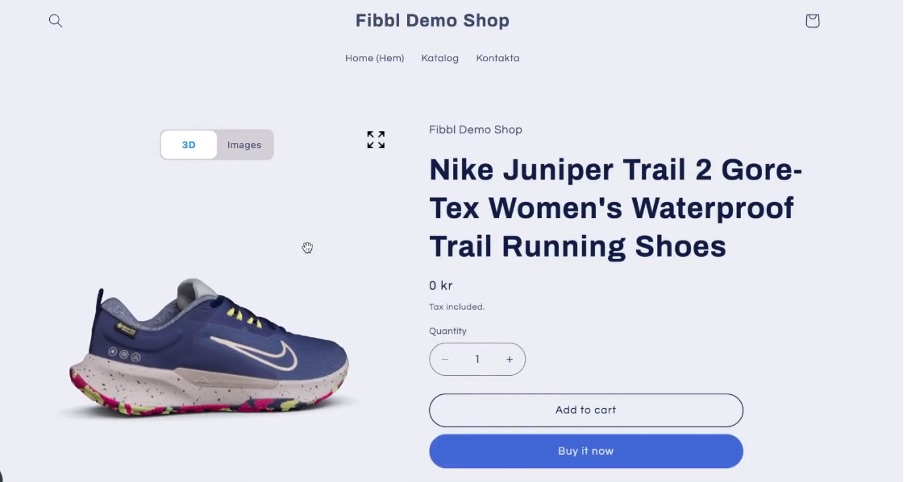
Fibbl is a 3D content and distribution platform for footwear and bag brands, now supporting headwear, gloves and accessories too. Fibbl AI Studio is one of its many content tools. It generates lifestyle images around a 3D model of your actual product, so what shoppers see is what you ship. Fibbl is the only full-chain solution here, covering both creation and distribution. Distribution means hosted assets, template-based batch exports with your own file naming and folder structure, and streaming 3D and AR into your store.
It works in four steps:
1. Send one physical sample per style to Fibbl’s studio.
2. The sample is scanned with Fibbl ARC, a proprietary photogrammetry-based rig built for footwear and bags. Brands do not buy or operate it.
3. The 3D asset is hosted on the Fibbl platform.
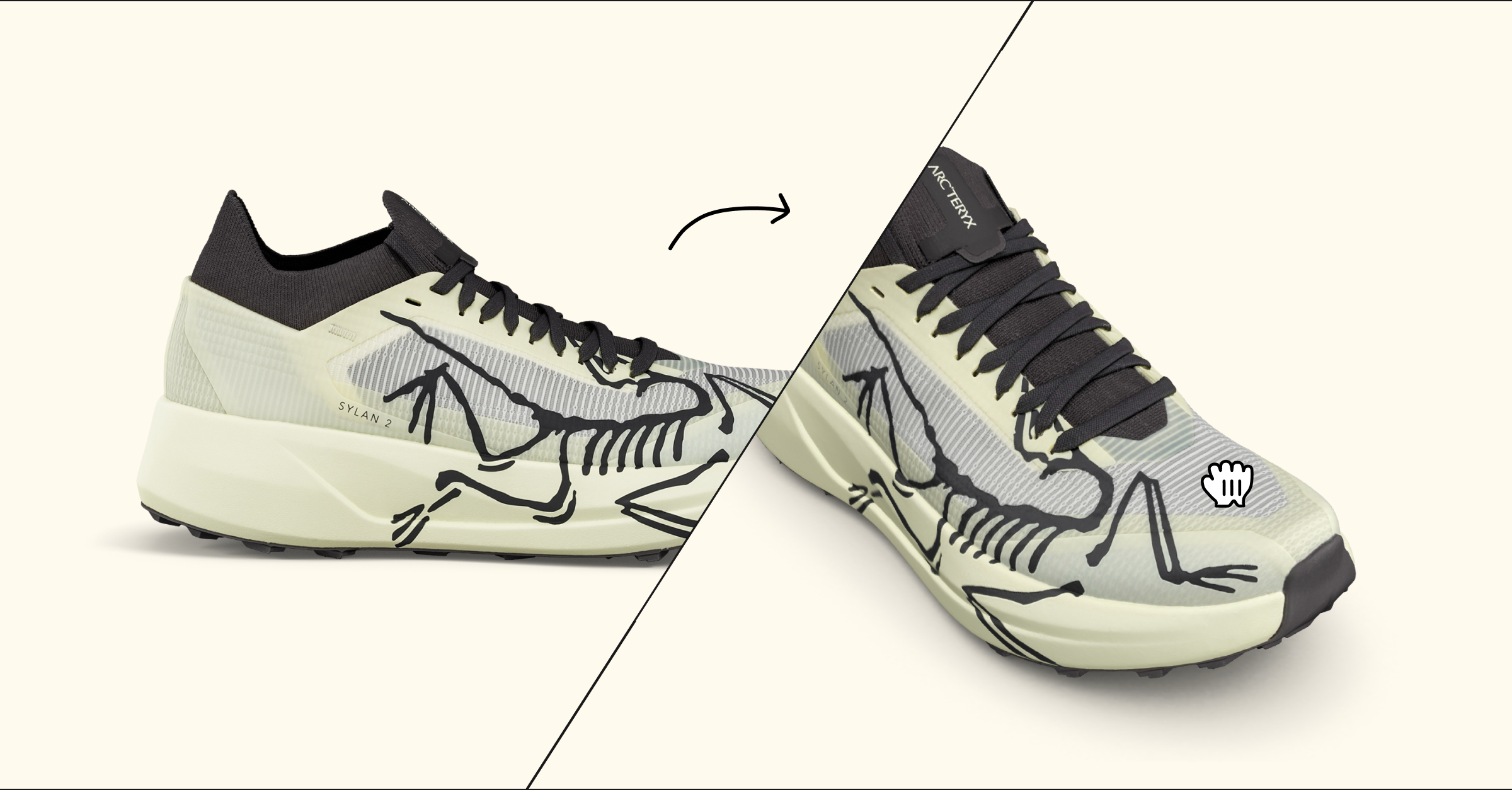
4. From that one asset: Render Studio for packshots, AI Studio for lifestyle images, plus the 3D viewer, virtual try-on, AR, product video and dynamic ad feeds.
Fibbl ARC captures sub-millimetre geometric accuracy and 300–500 high-resolution images per product, with cross-polarised lighting for glossy leather and metal. A single station handles up to 80 products per eight-hour shift. Its AI is trained on hundreds and thousands of real-word data points to produce assets that work best for ecommerce shopping.
Key Features
- Built on a real scan: material-specific capture for leather, suede, mesh, rubber and hardware
- AI Studio: prompt-based lifestyle scenes around your actual product, with any background, angle and lighting
- Packshots rendered from the same asset in Render Studio (3D-rendered, not AI-generated): presets and batch rendering, no reshoots
- Colourways from one sample: colour is set on the 3D model
- Multi-channel output: packshots and AI Studio images exported in JPEG, PNG and WebP, at channel-specific sizes for your site, marketplaces, social, paid ads, print and B2B materials
- One asset, many uses: the same scan also powers the 3D viewer, virtual try-on, AR, product video and dynamic ad feeds. High-resolution exports cover web, social, marketplaces and print, including large-format pieces. For billboard-scale hero campaigns, many brands still pair AI imagery with photography, so talk to the team about your format requirements.
Pricing
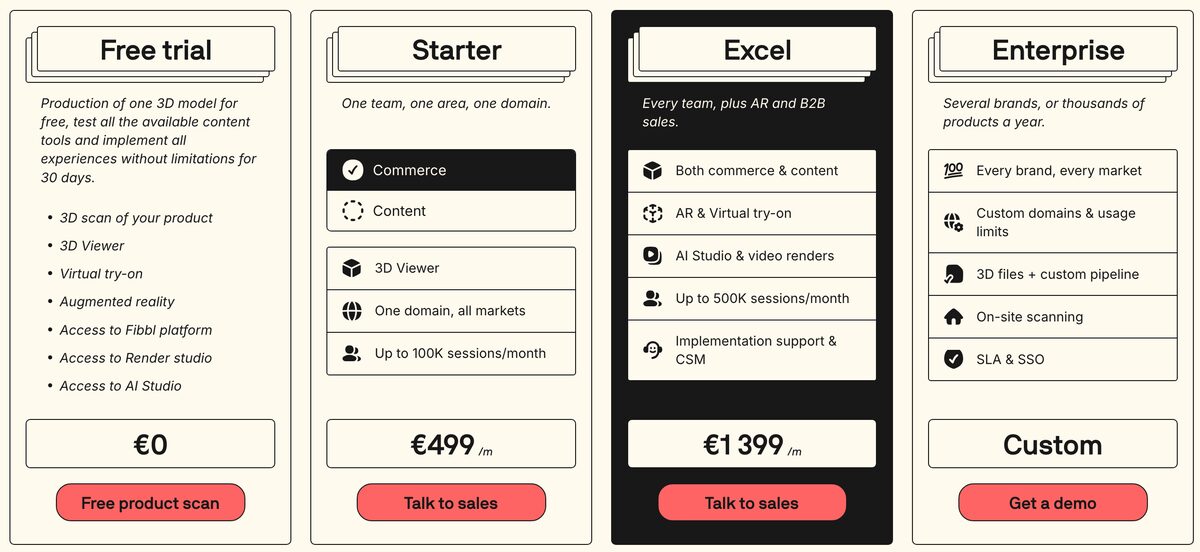
- Starter from €499/month (Render Studio for packshots)
- Excel €1,399/month, including AI Studio and video renders
- Enterprise (custom), also including AI Studio
- 3D production priced per model, €50–€240, depending on number of products, colour variations, subscription, product category and material
- Try 5 products free to test the platform on your own product
Worth noting, AI Studio is not part of the Starter plan; for custom campaign requirements, talk to the team
Pros
- Intuitive prompt-render-download workflow
- Accuracy from a real 3D scan
- Proven at catalog scale: GANT’s 549-product SS27 footwear category in 16 days, 20,000+ shoes and bags scanned
- Measurable results with GANT
Best For
Mid-size to large footwear and bag brands covering hundreds to thousands of SKUs that need photorealistic, accurate product imagery at catalog scale.
Proof: GANT cut packshot time and cost by 50% in one season (3D-rendered packshots), and lifted conversion 6.3% across 274 products, 400,000 users and 13 markets with its 3D-first experience (not AI images).
Free product scan | Talk to us
2. Zakeke
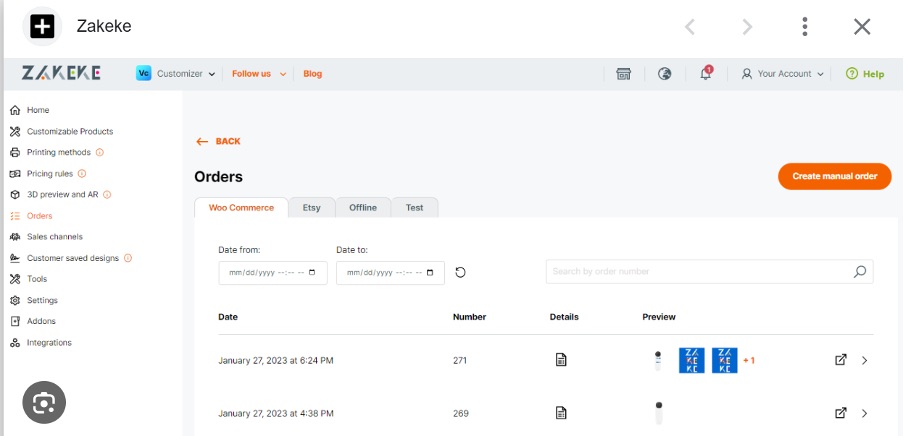
Zakeke is a visual commerce platform known for product customization and 3D. AI Agent Studio is its new set of task-specific AI agents inside the Zakeke workspace. You talk to the AI, and the AI does it, generating product images and visuals from assets a brand already has. It works with most ecommerce platforms.
Key Features
- Product Staging Agent: lifestyle photos in realistic environments or your own space, no sets or shoots
- Product Transformer Agent: images in different colours, materials and finishes from one existing visual
- Virtual Model Agent: embroidery, stitching and print effects on real people, as images or short video
- Ad Builder Agent: product visuals turned into ad images across formats and channels
- Multi-Product Scene Agent: several products combined into one merchandising visual from a prompt
- Upscale Agent: sharper images for ads, PDPs and marketplaces
- Also included: Video Agent (one image into a short product video) and 3D Model Generation Agent (AI 3D models from prompts or images)
Pricing
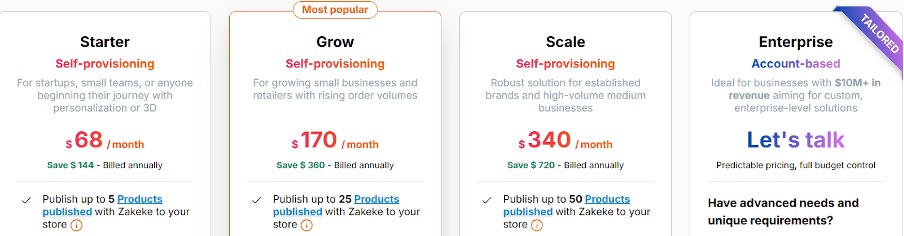
Starter $69.90/month ($59 billed annually), Grow $129.90 ($110), Scale $299.90 ($255), Enterprise on request. AI Agent Studio is included on every plan, with AI Creative Tools on credit-based usage. 14-day free trial, no credit card.
Pros
- Generates lifestyle product photos from existing images, no photoshoot or set
- Creates colour, material and finish variants from one image
- Produces ad visuals in multiple formats from the same images
- Works with assets already in Zakeke or simple uploads
Best For
Brands offering personalized or customizable products that want customers to visualize their unique configurations before purchasing.
3. Photoroom
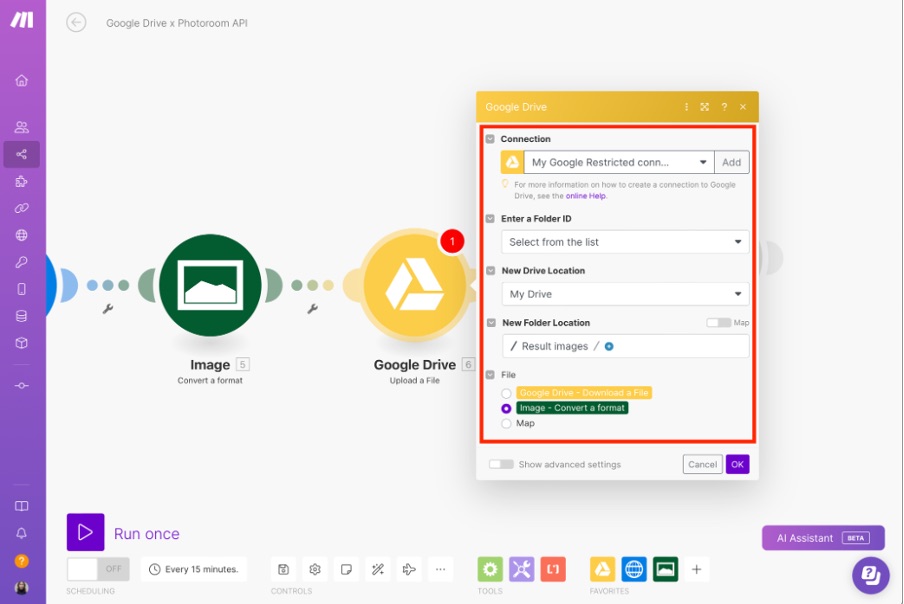
Photoroom has become the go-to solution for small businesses and individual sellers needing clean product images fast. Its AI instantly removes backgrounds and offers simple editing tools optimized for mobile devices. The platform also offers virtual models, though with less creative control, so it’s best for editing existing photos rather than generating new ones.
Key Features
- One-tap background removal with edge detection
- Batch processing for multiple images simultaneously
- Background template library for quick mockups
- Mobile app for on-the-go editing
- Magic Retouch removes unwanted objects instantly
Pricing

Pro from $7.50/month billed yearly ($12.99 monthly); higher Max and Ultra tiers; Enterprise custom.
Pros
- Easy to use
- Fast processing speed
- Commendable mobile experience
Best For
Small businesses that want a quick background removal without investing in professional photography equipment.
4. CLAID.AI
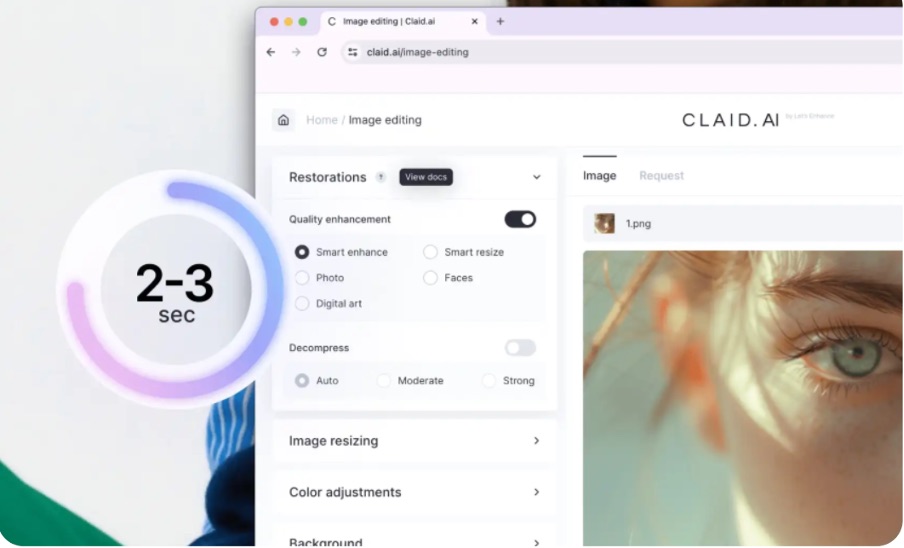
CLAID.AI focuses on automated image enhancement at scale, with API-first tools that fit into existing e-commerce workflows. The platform can help you place a single product photo into varied scenes, add fashion models, upscale, and outpaint. Its pure text-to-image capabilities are secondary.
Key Features
- AI-powered automatic image enhancement and upscaling
- Background removal and replacement via API
- Batch processing for large product catalogs
- Smart cropping and resizing to meet platform requirements
- Color correction and lighting adjustment algorithms
Pricing
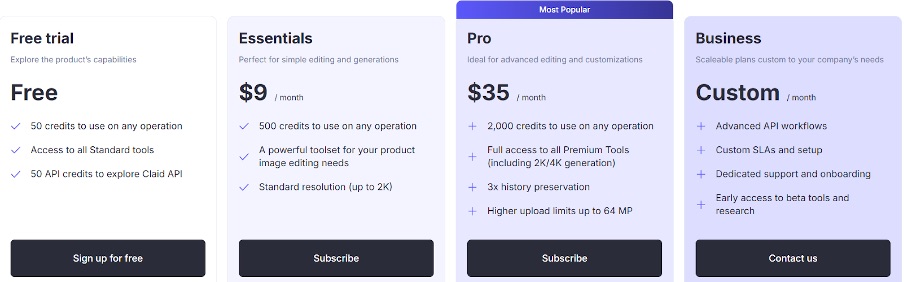
Essentials from $9/month billed yearly ($15 monthly), Pro $49/month ($35 yearly), Business custom.
Pros
- Powerful API for automation
- Excellent batch processing
- Robust AI enhancement and upscaling algorithms
Best For
E-commerce platforms and large retailers needing automated image processing workflows that enhance thousands of product images without manual intervention.
5. Pebblely
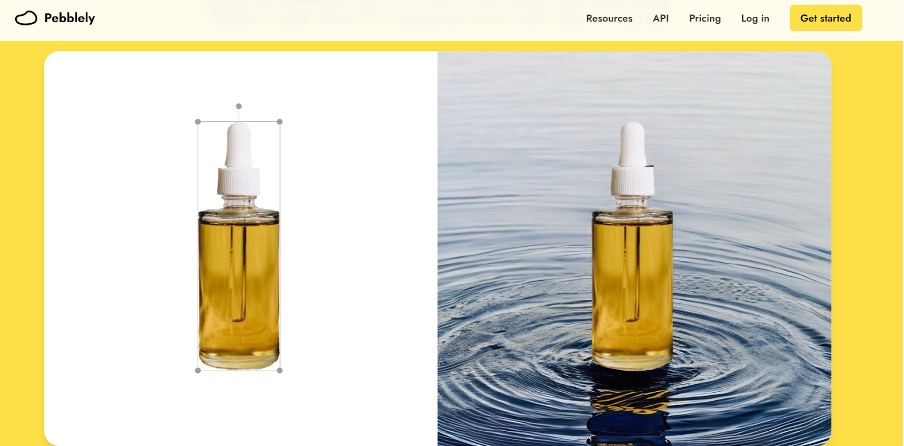
Pebblely is simple and quick, generating backgrounds, shadows and reflections around your product. Its editing depth is limited, and it can’t generate from scratch, which makes it a good starter tool for small shops.
Key Features
- AI-generated contextual backgrounds matching product type
- Multiple background variations from a single upload
- Brand kit for consistent visual identity
- Lighting and shadow generation for realism
- Format optimization for different marketing channels
Pricing
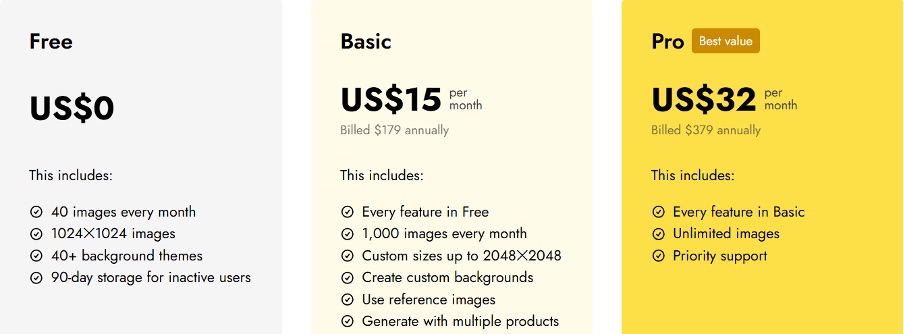
Lite $9/month, Basic $19/month, Pro $39/month. Annual billing available.
Pros
- High-quality background generation
- Easy to maintain consistency
- Quick results
Best For
Small brands that need professional-looking product scenes without photoshoot costs.
6. Flair.ai
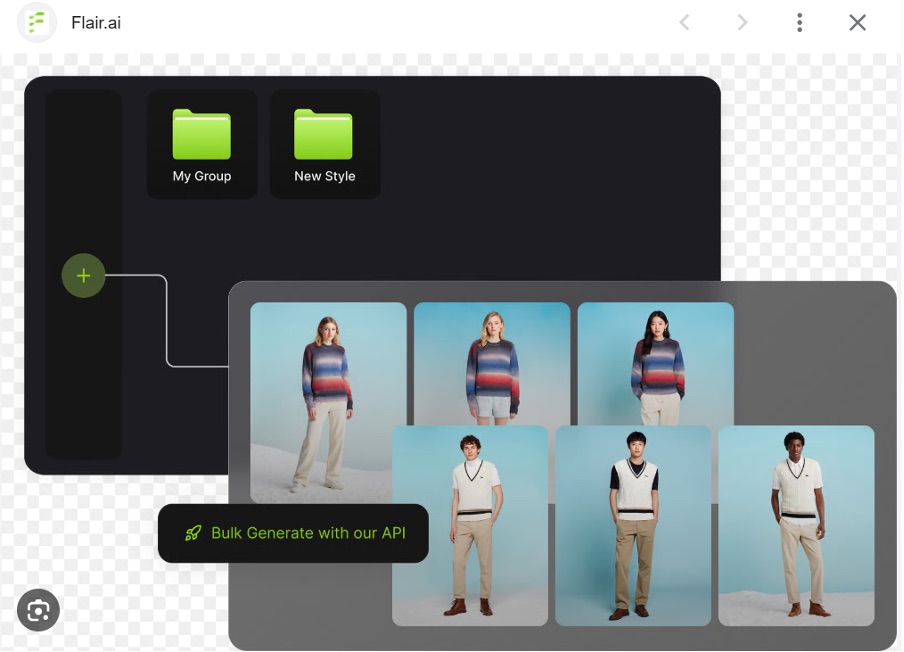
Flair.ai is strong for lifestyle imagery, with drag-and-drop staging that gives real control over composition. It includes AI models, background swaps and templates, but expect some iteration to keep products looking accurate.
Key Features
- AI scene generation with customizable props and settings
- Product staging with realistic lighting and shadows
- Creative control over composition and style
- Template library for common product categories
- High-resolution export for print and digital
Pricing

Free tier; Pro from $8/month billed annually, Pro+ $26/month, Scale $38/month, Enterprise custom.
Pros
- Excellent scene composition
- Affordable pricing
- Good creative flexibility
Best For
Marketing teams and creative professionals who need to generate lifestyle product imagery quickly for campaigns without organizing full photoshoots.
7. Adobe Firefly
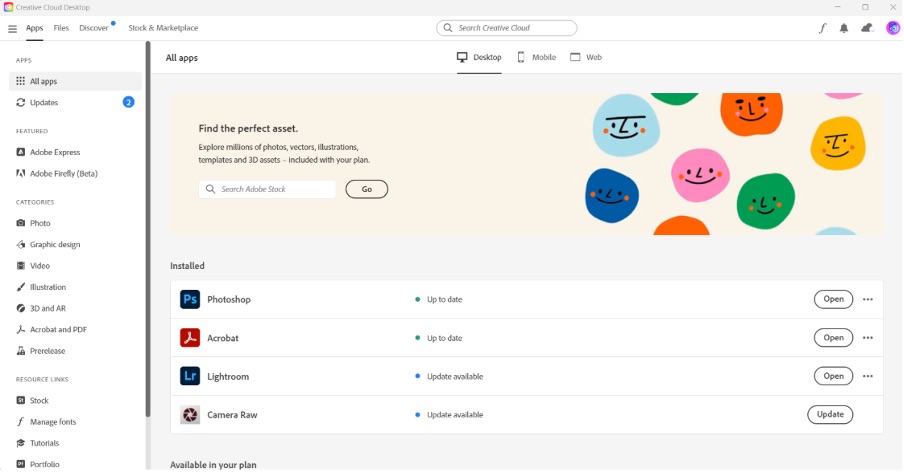
Adobe Firefly is one of the most complete generators and editors on this list, with text-to-image, Generative Fill, Expand and prompt-based edits. Its commercially safe positioning suits brands, though it’s less product-photo-specific than the specialists.
Key Features
- Text-to-image generation for product scenes and backgrounds
- Generative fill for seamlessly removing or adding elements
- Style matching to maintain brand consistency
- Integration with Photoshop, Illustrator, and Express
- Commercial safety with Adobe Stock content training
Pricing

Standard $9.99/month, Pro $19.99/month, Pro Plus $49.99/month, Premium $199.99/month.
Pros
- Commercially safe outputs
- Seamless, deep Adobe ecosystem integration
- Powerful creative features
Best For
Design teams already using Adobe Creative Cloud that want to incorporate generative AI into their existing product photography workflows.
8. AdCreative.ai
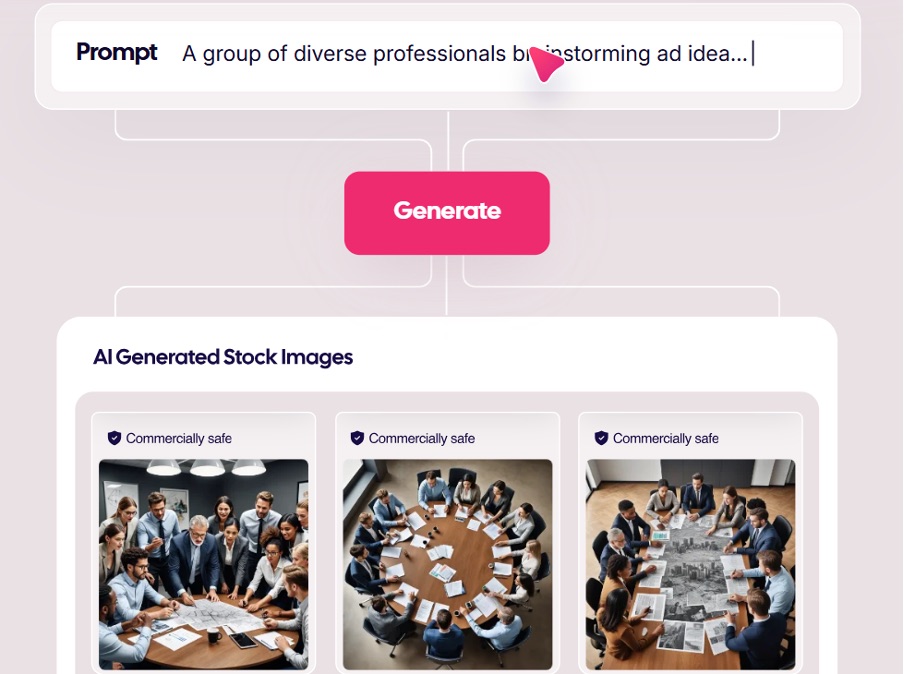
AdCreative.ai puts ads first and imagery second, turning product photos into AI photoshoots and then into ad creatives. Image control is lighter than in dedicated photo tools, so choose it for campaigns rather than catalogs.
Key Features
- Ad-optimized image generation with CTR prediction
- Multiple creative variations for A/B testing
- Platform-specific formatting for Facebook, Google, and Instagram
- Performance tracking and analytics
- Text overlay generation for ad copy
Pricing
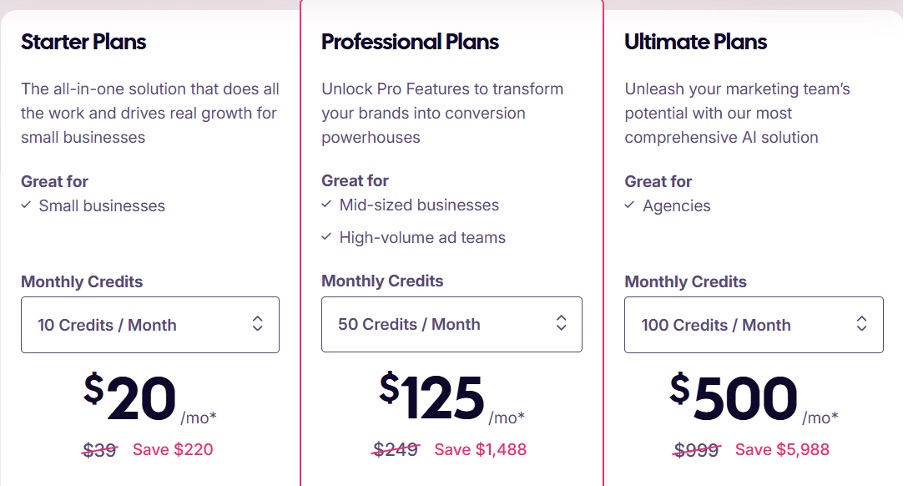
Starter $39/month (regular price), Professional $249/month, Ultimate $999/month.
Pros
- Purpose-built for ad performance
- Built-in A/B testing
- Good platform integrations
Best For
Marketers and paid media teams running product advertising campaigns who need to test creative variations and rapidly improve ROAS.
9. Freepik AI Image Generator (now Magnific)
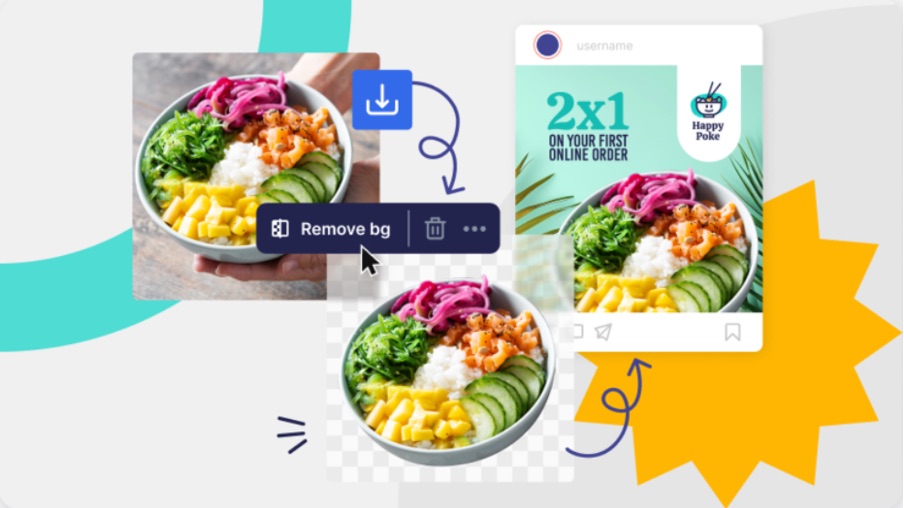
Freepik AI (Magnific) offers one of the broadest creative toolkits, with multiple models such as Flux, Ideogram and Imagen enabling true text-to-image. Upscaling is excellent, and it adds editing and mockups, but it isn’t specialized for product accuracy.
Key Features
- AI image generation with template integration
- A vast library of product mockup templates
- Vector and raster support for different use cases
- Brand kit for maintaining visual consistency
- Commercial licensing for generated content
Pricing

Premium from $20/month ($14.50 billed annually), Premium+ $45/month, Pro $110/month, Business custom.
Pros
- Huge template selection
- Good value pricing
- Versatile design options
Best For
Graphic designers and marketing teams creating product mockups, social media graphics, and promotional materials.
10. WeShop AI
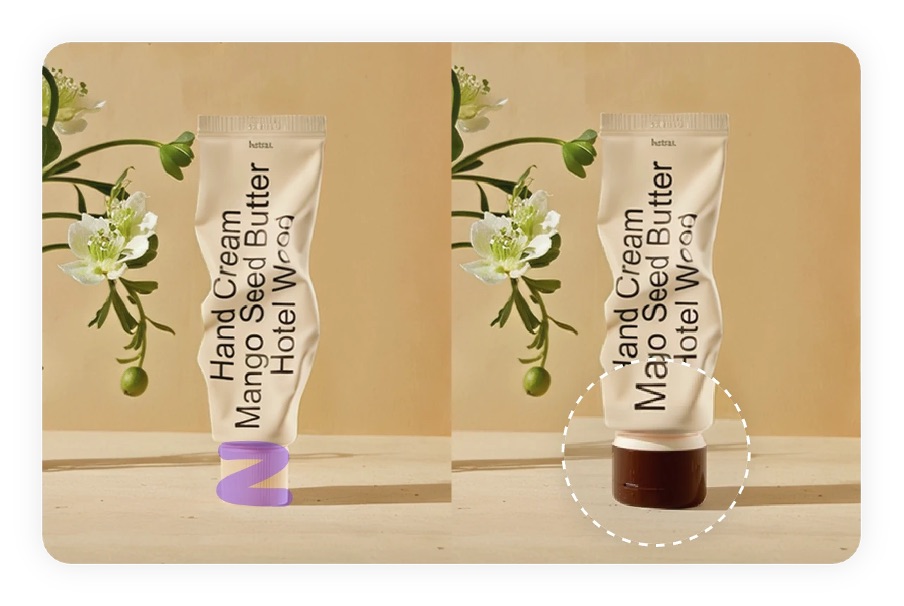
WeShop AI specializes in fashion and apparel visuals, with AI-generated models and outfit visualization tailored to clothing brands. Pose, mannequin and outfit controls add flexibility, but it’s narrow outside apparel.
Key Features
- AI-generated fashion models in various poses and settings
- Virtual outfit try-on visualization
- Background generation for fashion contexts
- Model diversity options for inclusive marketing
- Seasonal and trend-based scene templates
Pricing
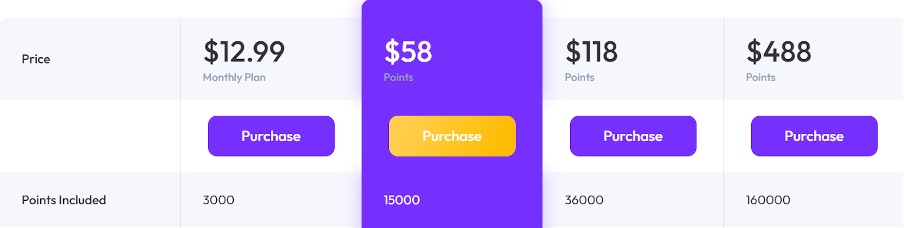
Points-based plans from $9.99/month (1,000 points); Ultra $45/month.
Pros
- Fashion-specific features
- Affordable entry point pricing
- Diverse model options
Best For
Fashion and apparel brands needing affordable model photography for lookbooks and e-commerce listings.
11. Caspa.ai
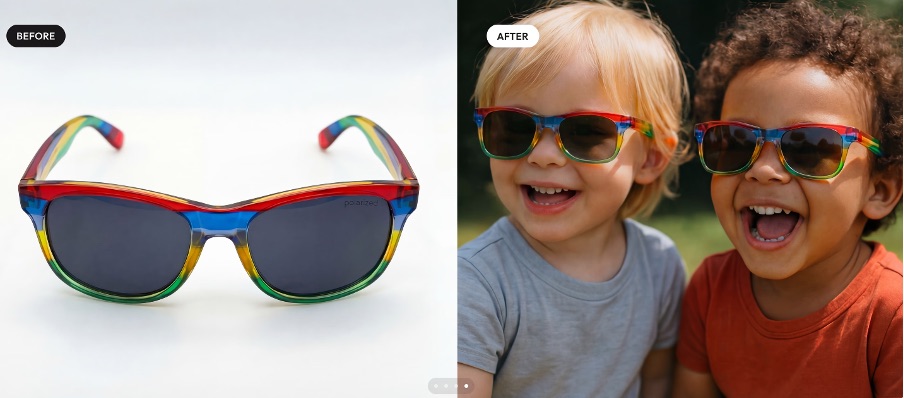
Caspa.ai creates lifestyle shots with AI humans and animals, and generates custom stock images, infographics and A+ content. It includes Magic Eraser and 4K upscaling, and suits Amazon sellers.
Key Features
- Realistic AI human models in customizable poses
- Product integration on AI-generated models
- Multiple demographic and style options
- Lifestyle setting generation around models
- Rapid iteration for different product presentations
Pricing
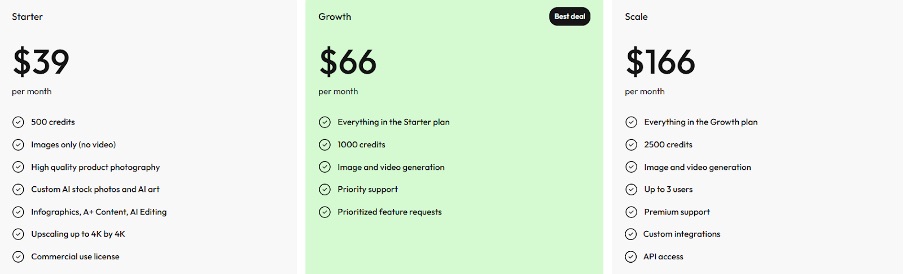
Starter $39/month (500 credits), Growth $66/month (1,000 credits), Scale $166/month (2,500 credits).
Pros
- Eliminates expensive model costs
- Fast generation
- Good variety of models
Best For
E-commerce brands wanting to show products in lifestyle contexts with human models but lacking the budget for traditional model photography.
12. Magic Studio

Magic Studio is a robust AI-powered editing suite combining background removal, object removal, image enhancement, and creative effects in one platform. It’s handy and works for product photography (though not a specialty tool like some other vendors on this list).
Key Features
- Background removal and replacement tools
- AI object removal for cleaning product images
- Image upscaling and enhancement
- Batch editing for processing multiple images
- Template-based design tools
Pricing
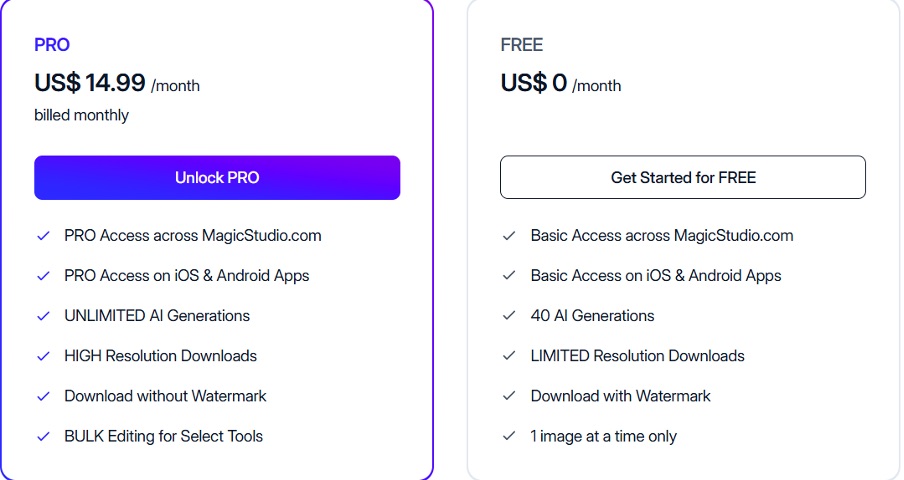
Free plan; Pro from $4.99/month billed yearly ($14.99 monthly).
Pros
- Complete editing toolkit
- User-friendly interface
- Excellent batching capabilities
Best For
Small teams needing a versatile editing solution covering multiple use cases.
How We Chose the AI Photography Tools
Here’s what we considered when selecting the best AI tools for photography:
- Quality and Accuracy: consistently photorealistic images with accurate edges, lighting, and color for e-commerce use.
- Scalability: performance from small catalogs to enterprise-scale volumes through automation, APIs, and batch processing.
- 3D Capabilities: support for 3D assets, AR, and interactive experiences such as virtual try-on and unlimited angles.
- Ease of Use: learning curve, interface clarity, documentation quality, and speed to first usable result.
- Feature Set: core capabilities such as background removal, enhancement, and 3D generation, specialization versus breadth.
- Integration Capabilities: how easily each tool connects with e-commerce platforms, CMSs, and existing workflows.
- Pricing and Value: pricing models and cost efficiency across different business sizes and use cases.
Which One Should You Choose?
- Quick clean-ups and cut-outs for a small catalog: Photoroom, CLAID.AI, Magic Studio
- Lifestyle scenes or ad creatives from existing photos where approximate is fine: Pebblely, Flair.ai, Adobe Firefly, Freepik AI, AdCreative.ai
- AI-generated models for apparel and lookbooks: WeShop AI, Caspa.ai
- An agent-based AI studio inside a visual commerce suite: Zakeke
- Near-to-exact product accuracy at catalog scale across footwear and bags: Fibbl
Fibbl is not the right fit if your catalog is very small or you just need a quick 2D background fix. Fibbl starts from a scan of your physical sample, so it pays off when you have a range to cover.
Choose Fibbl, The Best AI Tool for Product Photography for Progressive Brands
AI product photography turns content creation from a bottleneck into a growth lever.
Simple tools work for small catalogs. Mid-size and large brands covering hundreds or thousands of SKUs per season need a pipeline that holds quality at volume. For footwear and bag brands pursuing 3D-first commerce, Fibbl delivers unmatched realism, scalability, and measurable gains in conversion and returns.
Free product scan | Talk to us
AI Tools for Photography FAQs
1. Can AI completely replace traditional product photography?
In many cases, yes. AI can produce photorealistic visuals at a fraction of the cost and time. However, premium hero shots or complex lifestyle scenes may still require traditional photography. Most brands benefit from a hybrid approach. They capture once with traditional photography, and then scale with AI tools.
2. How do I choose the right AI product photography tool?
To pick the right tool, consider your primary goal (background removal, lifestyle scenes, ad creatives, 3D visualization, or full asset creation), your catalog size, whether you need 2D or 3D, and how exact the realism must be.
3. Are AI-generated product images allowed on ad platforms?
Yes. Platforms like Google, Facebook, and Instagram accept AI-generated images as long as they accurately represent the product and comply with their policy guidelines. Using commercially safe tools like Fibbl helps ensure compliance and avoid customer trust issues.
4. What ROI can AI product photography deliver?
AI Product photography ROI depends on the tool and the use. GANT cut packshot time and cost by 50% in one season and lifted conversion 6.3% with Fibbl’s 3D-first experience. Zach Footwear reduced returns by 29% after partnering with Fibbl. Worth mentioning not all of these are AI-image-specific results.
5. Do these tools require technical expertise?
No. Most consumer tools are no-code and easy to use. API-based or enterprise platforms require some integration. Solutions like Fibbl handle technical complexity through a simple managed implementation.
6. What’s the difference between AI product photography and 3D product visualization?
AI product photography generates or enhances 2D images while 3D product visualization creates interactive models. Customers can rotate, zoom, or try on shoes virtually. Platforms like Fibbl combine both by using 3D assets to generate unlimited 2D product imagery.
7. Do I need to photograph my products first when working with Fibbl?
No. Send a physical sample per style and Fibbl scans it. Colourways can be set digitally on the 3D model from that one sample.
8. How fast can Fibbl cover a whole range?
Up to 50 products per eight-hour shift per station. GANT’s 549-product SS27 footwear category was done in 16 days.
9. Where can you use Fibbl-produced AI images?
You can use Fibbl-produced AI images on your own site, marketplaces, social, paid ads and print, all from one source.